Hey guys, it’s Tom—your go-to fishing buddy who’s spent the last 28 years chasing everything from striped bass in the Chesapeake to marlin in the Gulf of Mexico, and even ventured down to Costa Rica for sailfish when I needed a break from the East Coast chop. Lately, I’ve been getting the same question over and over: “Tom, is that high-end fishing gear really worth the hype—and the price tag? Can’t I just grab a $50 rod from Walmart and catch the same fish?”
I get it. When you see a Shimano Stella reel going for $800+, a custom G. Loomis rod hitting $1,200, or even a premium spool of braided line costing 3x what the generic stuff does, it’s easy to scoff. I used to be that guy—preaching “it’s the angler, not the gear” like it was a gospel. I fished with beat-up, budget gear for 15 years, convinced that spending big on tackle was just for guys with more money than sense. That all changed in 2017, when I borrowed a friend’s high-end setup for a tuna trip off the coast of Massachusetts. Since then, I’ve tested dozens of premium and budget gear setups side by side, and I’m here to give you the unvarnished truth: high-end fishing gear isn’t about showing off—it’s about consistency, durability, and turning “almost” catches into lifelong trophies. Let me break it down, with plenty of my own war stories to back it up—no fancy jargon, just a veteran angler telling it like it is.
First, Let’s Get Clear: What Even Counts as “High-End” Fishing Gear?
Before we dive in, let’s make sure we’re on the same page. High-end gear isn’t just “expensive gear”—it’s tackle built with precision, premium materials, and angler-centric design. Forget the flimsy rods that bend like wet spaghetti, the reels that jam mid-fight, or the line that snaps the second a big fish bites. The best high-end gear (the stuff that’s actually worth the money) checks all these boxes, and I’ve tested every one of these features firsthand:
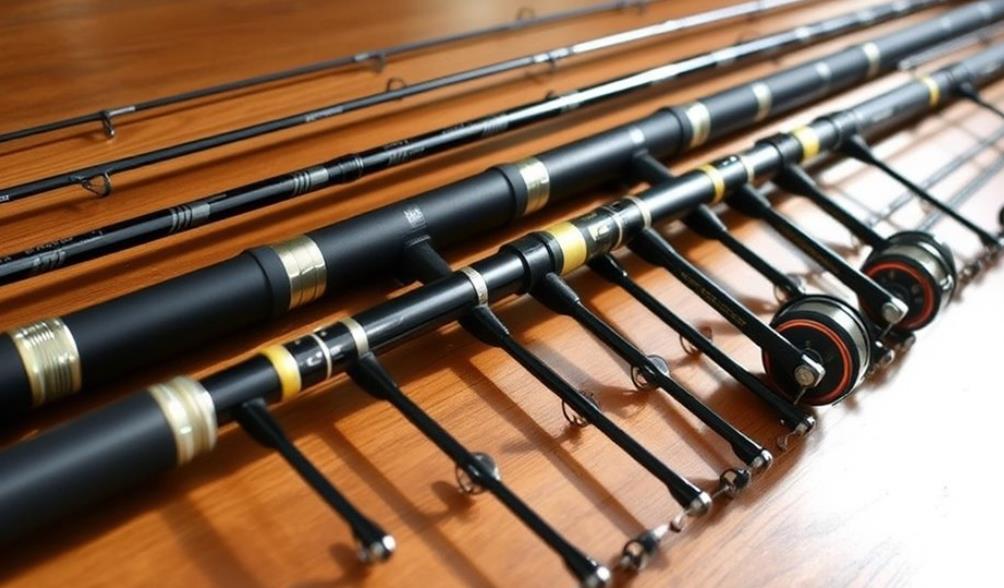
- Rods: Think high-modulus carbon fiber (not cheap fiberglass) that’s lightweight but incredibly strong—so you can cast for 8 hours without arm fatigue, but it has the backbone to fight a 100-pound tuna. Brands like G. Loomis, St. Croix, and Sage lead the pack here, with rods engineered for specific species (no “one-size-fits-all” garbage). I’ve got a G. Loomis E6X Inshore rod that’s 7 feet long, weighs next to nothing, and yet it handled a 40-pound redfish like it was a bluegill.
- Reels: Precision-machined, corrosion-resistant, and smooth as butter. We’re talking reels with sealed bearings (critical for saltwater fishing), robust drag systems that don’t slip mid-fight, and ergonomic handles that fit your hand like a glove. Brands like Shimano, Penn, and Abu Garcia (yes, their high-end lines, not the budget stuff) dominate here. My Shimano Stella 6000SW reel has been through 5 years of saltwater abuse—no rust, no jams, and it still spins as smoothly as the day I bought it. Compare that to the $40 reel I used to have, which seized up after 6 months of saltwater fishing.
- Line & Bait: Premium braided or fluorocarbon line that’s stronger, thinner, and more abrasion-resistant than the cheap monofilament. I swear by PowerPro braided line—its small diameter lets me cast farther, and it has zero stretch, so I feel every nibble (even the tiny ones). And don’t get me started on premium bait: fresh, properly preserved live bait (not the frozen, rubbery stuff from the gas station) makes a world of difference, and high-end tackle shops source the best bait because they know serious anglers won’t settle for less.
- Extras That Matter: From corrosion-resistant hooks (that don’t bend when you hook a big fish) to ergonomic rod holders, high-end gear is all about the details. I once lost a 30-pound striped bass because my cheap hook bent mid-fight—never happened again once I switched to premium Owner hooks. Small details, big results.
The Myth: “High-End Gear Is Just for Snobs—Budget Gear Works Fine”
I used to yell this from the rooftops. Back in 2015, I went on a weekend fishing trip with my buddy Jake—he showed up with a $1,000 St. Croix rod and Shimano reel, and I laughed at him the whole drive to the dock. “Why waste that money?” I said. “My $60 Walmart rod catches just as many fish.” We set up side by side on the pier, targeting striped bass. For the first hour, I was right—we both caught a few small ones. Then, a monster hit my line—a 35-pound striper that would’ve been the biggest of my life at the time. I fought it for 5 minutes, my cheap rod bending so far I thought it would snap, my reel jamming every time I tried to reel in. Just as I was about to land it, the line snapped—cheap monofilament that couldn’t handle the pressure. Jake, meanwhile, hooked a 40-pound striper 10 minutes later. His high-end rod had the backbone to fight it, his reel spun smoothly, and his braided line held strong. He landed it in 3 minutes flat, and I stood there, red-faced, eating my words. That day, I learned a hard lesson: budget gear works—until it doesn’t. And when it doesn’t, you lose the fish of a lifetime.
Compare that to my 2021 trip to Kona, Hawaii, where I brought my own high-end setup: a G. Loomis Deep Sea rod paired with a Penn International reel (the same one luxury charters use, and for good reason). I was targeting yellowfin tuna, and within an hour, I hooked a 120-pound giant. This fish fought like a beast—diving deep, pulling hard, trying to break free. But my rod didn’t bend to the point of breaking; it flexed just enough to absorb the shock, protecting both the rod and the line. My reel’s drag system kicked in perfectly, letting the fish run when it needed to, but pulling it in steadily when I had the chance. After 15 minutes, I landed that tuna—and it was all because my gear didn’t fail me. If I’d brought my old budget setup, that fish would’ve been long gone, and I would’ve gone home empty-handed (again).
Here’s the kicker: High-end gear isn’t just about landing big fish—it’s about consistency. I used to go 3-4 trips without catching anything worthwhile, blaming the weather or the fish. But once I switched to premium gear, I started catching fish on almost every trip. Why? Because the gear is more sensitive (I feel every nibble), more durable (it doesn’t break mid-fight), and more reliable (it works in rough conditions, from choppy seas to extreme heat). It’s not that the gear catches the fish for you—it’s that it removes the excuses. You’re no longer fighting your gear; you’re fighting the fish. That’s the value of high-end tackle—it’s not about being fancy; it’s about control and confidence.
When High-End Fishing Gear Is 100% Worth It (From a Veteran’s Experience)
I’m not saying every angler needs to drop $2,000 on a rod and reel. If you’re a casual angler who fishes once a month at the local pond, chasing bluegill and small bass, a $50-$100 setup is more than enough. But after 28 years of fishing, here are the scenarios where splurging on high-end gear is non-negotiable—trust me, I’ve learned this the hard way:
1. You’re Chasing Trophy Fish (Big Game = Big Gear)
If you’re after marlin, tuna, swordfish, halibut, or even big striped bass—fish that fight hard and can break cheap gear in seconds—you need high-end tackle. These fish aren’t messing around; they’ll test every part of your setup, from the rod to the hook. Last year, I booked a trip to Costa Rica to chase sailfish—one of the most elusive and powerful game fish in the world. I brought my Shimano Stella reel and G. Loomis rod, and let me tell you: it saved my trip. I hooked 5 sailfish that day, and landed 3. The first one I hooked took off like a rocket, pulling 100 yards of line in 10 seconds. My reel’s drag system held strong, my rod absorbed the shock, and I was able to fight it in without breaking the line. A guy on the boat next to me had a budget setup—he hooked a sailfish, and his rod snapped within 2 minutes. He went home empty-handed, while I came home with stories (and photos) to last a lifetime. Budget gear can’t handle big game—period. The difference between landing a trophy and losing it is often a $200 reel or a $300 rod.
2. You Fish in Saltwater (Corrosion = Gear Killer)
I fish saltwater 90% of the time, and let me tell you: saltwater is brutal on gear. It corrodes cheap metal, rots cheap line, and destroys cheap reels faster than you can say “tide change.” I used to go through 2-3 budget reels a year—they’d seize up, rust, or break after a few trips. Then I switched to high-end saltwater gear, which is built with corrosion-resistant materials (like anodized aluminum and sealed bearings) that can handle the salt. My Penn International reel has been through 5 years of saltwater fishing—no rust, no jams, no issues. I rinse it off after every trip, and it’s still as good as new. Budget gear in saltwater is a waste of money—you’ll end up spending more replacing it every year than you would on one high-end setup that lasts a decade. I’ve got friends who still buy cheap saltwater gear, and they’re always complaining about their reels jamming or their rods breaking. I just shake my head—they’re throwing money away.
3. You Fish Frequently (Durability = Long-Term Savings)
If you’re like me—fishing 2-3 times a month, 12 months a year—high-end gear is an investment, not a splurge. Let’s do the math: A budget rod and reel costs $100, and you replace it every year (because it breaks or wears out). That’s $1,000 over 10 years. A high-end rod and reel costs $1,000, and it lasts 10+ years (with proper care). That’s the same amount of money over 10 years, but you’re getting a far better experience. I’ve had my G. Loomis rod for 7 years, and it’s still in perfect condition—no cracks, no wear, no loss of strength. I’ve had my Shimano reel for 5 years, and it still spins as smoothly as the day I bought it. When you fish frequently, high-end gear saves you money in the long run—and it’s more enjoyable to use. No more fighting jammed reels or bent rods; you can focus on fishing, not fixing your gear.
4. You Want to Improve Your Skills (Sensitivity = Better Angling)
Here’s a secret most casual anglers don’t know: high-end gear makes you a better angler. Why? Because it’s more sensitive. Cheap rods are stiff and unresponsive—you can’t feel the tiny nibbles from small fish, and you can’t tell when a big fish is testing your bait. High-end rods, though, have a “feel” that lets you detect even the lightest bites. I used to miss half the bites I got because my cheap rod didn’t transmit the movement. Now, with my G. Loomis rod, I can feel a bluegill nibbling on my bait from 30 feet below the surface. That sensitivity lets me set the hook faster, land more fish, and learn more about how fish behave. It’s not just about the gear—it’s about the feedback it gives you. If you want to get better at fishing, high-end gear is a tool that will help you grow as an angler. I’ve taught dozens of beginners over the years, and the ones who use high-end gear pick up skills faster—they can feel what’s happening under the water, which makes them more confident and more successful.
How to Avoid Wasting Money on “High-End” Gear (My Pro Tips)
Not all high-end gear is created equal. I’ve made my share of mistakes—dropping $500 on a rod that wasn’t right for my style, or buying a reel because it was “popular” but not practical for the fish I chase. Here’s how to spot the good stuff (and avoid the overpriced garbage)—these are tips I’ve learned over 28 years, and they’ve saved me thousands of dollars:
- Buy for Your Style of Fishing: Don’t buy a deep-sea rod if you fish inshore, and don’t buy a lightweight trout rod if you chase tuna. High-end gear is built for specific species and environments—match the gear to what you fish. I made the mistake of buying a heavy deep-sea rod for inshore fishing once; it was too bulky, too heavy, and I hated using it. Now, I have a separate setup for inshore, offshore, and freshwater—each one tailored to what I’m fishing that day. Brands like Shimano and Penn make specialized reels for every scenario, so do your homework before you buy.
- Test It Before You Buy: Don’t just buy gear online because it has good reviews—hold it, cast it, feel it. Most tackle shops let you test rods and reels in the store (or even in a nearby pond). I always cast a rod a few times before I buy it—does it feel balanced? Is it too heavy? Does it flex the way I want it to? A $1,000 rod that feels awkward in your hand is worse than a $100 rod that fits like a glove. I once bought a Sage rod online because it was highly rated, and when I got it, it was too long for my arm length—I ended up selling it at a loss. Lesson learned: test first, buy later.
- Stick to Trusted Brands (But Avoid Hype): Brands like G. Loomis, St. Croix, Shimano, Penn, and Abu Garcia (their high-end lines) have been around for decades, and they’re trusted for a reason—they make quality gear. But avoid “limited edition” or “hype” gear that’s overpriced for no reason. I’ve seen rods with fancy paint jobs sell for $200 more than the identical model with a plain finish—don’t fall for that. Focus on performance, not aesthetics. And don’t sleep on mid-range options from these brands—they often offer 80% of the performance of their top-tier gear for 50% of the price. For example, Shimano’s mid-range Saragosa reel is almost as good as their top-tier Stella, but costs half as much.
- Take Care of Your Gear: High-end gear lasts longer if you maintain it. Rinse your saltwater gear with fresh water after every trip, dry it off, and store it in a cool, dry place. Oil your reels every few months, and replace your line regularly. I’ve seen guys spend $1,000 on a reel, then leave it out in the rain or saltwater—of course it breaks. Treat your gear with respect, and it will last for years. I clean my reel after every trip, and it’s still going strong after 5 years—no rust, no jams, no issues.
The Verdict: Is High-End Fishing Gear Worth It?
For me? Absolutely—when it’s the right gear for the job. I’ve spent thousands of dollars on high-end tackle over the years, and I’d do it again in a heartbeat. Not because I’m a snob, but because I value my time on the water. I’d rather spend $1,000 on a rod and reel that lasts 10 years, helps me land trophy fish, and makes fishing more enjoyable than $100 on a setup that breaks every year and leaves me frustrated. High-end gear isn’t for everyone—but it’s for serious anglers who want to get the most out of their time on the water.
Here’s my final take: If you’re a casual angler who fishes once in a while, stick to budget gear—you don’t need to spend a fortune. But if you’re serious about fishing, if you chase big game, if you fish frequently, or if you want to improve your skills—high-end gear is worth every penny. It’s not about being fancy; it’s about investing in something that works, lasts, and makes your time on the water better. I still have that 120-pound tuna photo on my wall, and every time I look at it, I think about how my high-end gear helped me land it. That’s the magic of premium tackle—it doesn’t just help you catch fish; it helps you make memories.
Next time you’re debating whether to splurge on high-end gear, remember my striped bass fiasco. Don’t be the guy standing on the pier, watching your dream fish swim away because your gear failed you. Invest in good gear, take care of it, and it will pay off—guaranteed.
Now, who’s ready to hit the water with me? I’ll bring my Shimano reel and G. Loomis rod—you bring your curiosity. Trust me, you’ll see the difference.
— Tom, Your Veteran Fishing Buddy