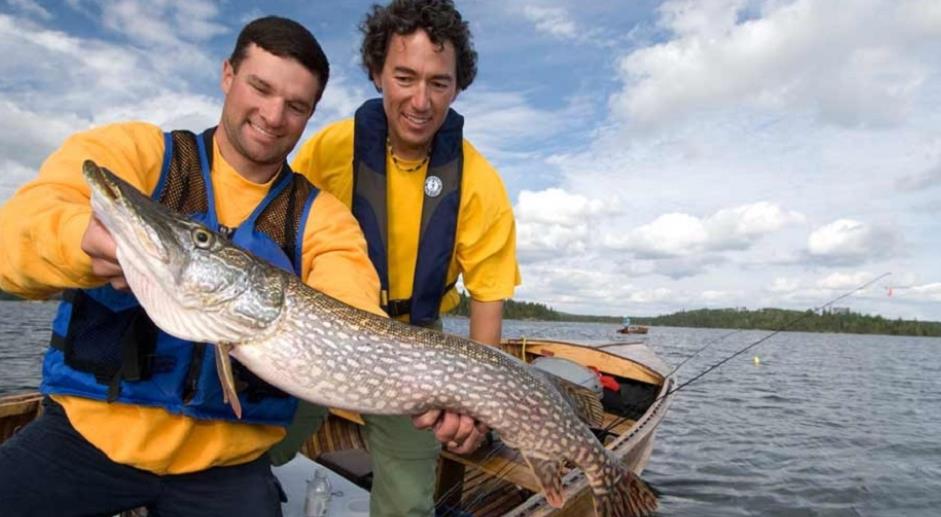
Hey guys, Tom here—and let’s cut to the chase: If you’re still casting blindly into the water, waiting for a lucky bite, you’re wasting your time. I’ve been fishing for 35+ years, and let me tell you the biggest secret I’ve learned: the water tells you where the fish are. You don’t need fancy gadgets, expensive sonar, or a “secret spot” passed down from a guy who knows a guy. All you need is to slow down, look closely, and listen—to the ripples, the current, the way the light hits the surface. I’ve lost count of how many times I’ve shown up to a lake where my friends are struggling to catch a single panfish, only to pull in trophy bass or walleye within 10 minutes—all because I took 2 minutes to read the water first. This isn’t some “pro trick” reserved for tournament anglers; it’s common sense, honed by decades of standing on docks, wading in streams, and staring at water until I could read it like a book. Today, I’m pulling back the curtain—sharing my personal stories, the mistakes I made (oh, there were plenty), and the simple, actionable tips that will turn you from a “cast and hope” angler into someone who finds fish like it’s second nature. Let’s dive in—pun absolutely intended.
First, Let’s Get One Thing Straight: Reading Water Isn’t Rocket Science (But It’s Not Guesswork Either)
I hear it all the time: “Tom, I just don’t see what you see. The water looks the same everywhere to me.” Trust me, I get it—I felt the same way when I was 16, dragging a worm behind a bobber and wondering why my dad was catching 3 times as many fish as me. Turns out, he wasn’t lucky—he was reading the water. Reading water is just about noticing the little things: a slight change in current, a patch of darker water, a ripple that doesn’t look like the rest. It’s about understanding how fish behave—where they hide, where they feed, and why they choose one spot over another. Fish aren’t random; they’re creatures of habit, and the water gives away their secrets. Let me start with the basics, using a story that taught me one of the most valuable lessons of my fishing life.
Lesson 1: Current Breaks – The Fish’s Favorite Hideout (And My First Big Win)
When I was 18, I went fishing with my uncle Joe on the Susquehanna River—he was a old-school angler who never used a rod holder, never checked the weather app, and always came home with a cooler full of smallmouth bass. I spent the first hour casting into the middle of the river, reeling in nothing but weeds. Frustrated, I asked him why he was catching fish and I wasn’t. He pointed to a spot near a fallen tree, where the current swirled around the trunk, creating a small eddy. “Look at that,” he said. “The current’s fast out here, but right there? It’s slow. Fish don’t want to fight the current all day—they hang in the slow spots, waiting for food to drift by.”
I walked over to that eddy, cast my worm into the slow water, and within 30 seconds, I hooked a 5-pound smallmouth. That day, I caught 12 bass—all from current breaks. To this day, current breaks are the first thing I look for, whether I’m fishing a river, a lake, or even a pond with a small stream feeding into it. So what’s a current break? It’s any object or feature that slows down or redirects the current: a fallen tree, a rock, a dock piling, a sandbar, even a patch of tall grass. Fish love these spots because they’re low-effort feeding zones—they can rest out of the fast current while waiting for minnows, insects, or other prey to drift into their path.
Pro Tip from Tom: Not all current breaks are created equal. On rivers, look for the “seam”—the line where fast water meets slow water. That’s where the magic happens. On lakes, pay attention to points (pieces of land that stick out into the water)—they create subtle current breaks, and fish love to hang along the edges. Last year, I was fishing Lake Champlain, and I noticed a small point where the wind was pushing water into the shore, creating a slow eddy. I cast my spinner into that seam, and I landed 7 smallmouth in 45 minutes. My friend, who was casting 10 feet away in the fast water, caught nothing. See? It’s the little things.
Lesson 2: Water Depth & Color – The Fish’s Secret Bedroom and Dining Room
Another big mistake I see new anglers make is ignoring water depth and color. Fish are picky about where they hang out, and depth/color tell you exactly what they’re looking for. Let’s start with depth—fish move to different depths depending on the time of day, the season, and the water temperature. In the summer, when the water is warm, fish go deep to find cooler water. In the spring and fall, when the water is cooler, they move to shallow areas to feed and spawn. But here’s the thing: even in deep lakes, fish don’t just swim around randomly—they hang out near structure (submerged trees, rocks, drop-offs) that gives them cover.
Let me share a story from Lake Tahoe a few years back. It was mid-July, and the water surface was 75 degrees—way too warm for lake trout (they prefer 50-60 degrees). My friends were casting into the shallow coves, complaining that there were no fish. I grabbed my depth finder (yes, I use one occasionally—but only to confirm what I already suspect) and found a drop-off near Emerald Bay, where the water went from 20 feet to 60 feet in a matter of yards. I cast my spoon down to 50 feet, and within 10 minutes, I hooked an 18-pound lake trout. The difference? I paid attention to the depth—and the fact that the water color changed from light blue (shallow) to dark blue (deep) right at that drop-off. Darker water means deeper water, and deeper water means cooler temperatures—perfect for lake trout.
Water color is just as important. Clear water means fish can see you, so you need to use lighter lures and be quiet. Murky or stained water means fish rely on their sense of smell and vibration, so use brighter lures or live bait. I learned this the hard way on Lake Okeechobee. One summer, the lake was murky from a storm, and I was using clear plastic worms—caught nothing. A local guide told me to switch to bright chartreuse worms, and I landed 5 bass in an hour. Why? The bright color stood out in the murky water, making it easier for the bass to find. On the flip side, when I’m fishing Lake Fork (clear water), I use green pumpkin or brown worms—colors that blend in, so the bass don’t get spooked.
Pro Tip from Tom: Look for “transition zones”—areas where the water color or depth changes suddenly. That’s where fish hang out. For example, a spot where shallow, light-colored water meets deep, dark water, or a patch of murky water near a clear stream inlet. These transitions are like a restaurant for fish—prey gets stuck there, and fish know it.
Lesson 3: Ripples, Eddies, and Surface Activity – The Fish’s Dinner Bell
You don’t need to be a pro to notice surface activity—but you do need to know what it means. A single ripple that’s not caused by wind? That’s a fish feeding. A group of ripples, or a “boil” (when the water bubbles up)? That’s a school of fish chasing prey. I’ve had days where I’ve driven around a lake, looking for surface activity, and found a hot spot in 5 minutes. Let me tell you about a day on Lake Erie a few years back: I was trolling for walleye, not catching much, when I noticed a series of small boils near the shore. I pulled up, cast my crankbait into the boils, and hooked a walleye on the first cast. Turns out, the boils were walleye chasing shad—and I was in the right place at the right time, just because I paid attention to the surface.
But not all surface activity is obvious. Eddies (small, circular currents) are a big one—they’re like little whirlpools, and fish love to hang in them. I was fishing a small stream in Pennsylvania last fall, and I noticed a tiny eddy near a rock. I cast my fly into the eddy, and I caught a 2-pound trout—my biggest of the day. The eddy was only a foot wide, but it was enough to hold a fish. Another thing to look for: “slicks”—smooth patches of water among choppy water. Slicks are caused by fish slapping the surface, or by oil from their scales—and they’re a dead giveaway that fish are nearby.
Pro Tip from Tom: Early morning and late afternoon are the best times to spot surface activity—fish are more active, and the light makes ripples and boils easier to see. If you’re fishing during the middle of the day, when the sun is bright, look for shaded areas (under trees, docks, or overhanging rocks)—fish hide there to avoid the sun, and they’ll still be feeding.
Lesson 4: Seasonal Changes – How to Read Water All Year Round
Reading water isn’t a one-and-done skill—it changes with the seasons. What works in the spring won’t work in the summer, and what works in the fall won’t work in the winter. I’ve learned this over decades of fishing through every season, and it’s one of the most important things I can teach you. Let’s break it down by season, with my personal tips:
Spring (March-May): Fish are spawning, so they move to shallow, warm water (6-12 feet deep) near structure (rocks, logs, grass). Look for clear, shallow coves—those are spawning grounds. I was fishing Lake Fork in April last year, and I found a shallow cove with submerged grass. I cast a Texas-rigged worm near the grass, and I caught 8 bass in an hour—all spawning females. The water was warm (65 degrees), and the shallow area was perfect for them to lay their eggs.
Summer (June-August): Water gets warm, so fish move to deep water (20+ feet) or shaded areas. Look for drop-offs, submerged timber, or deep holes. On Lake Tahoe, I fish deep drop-offs in the summer—lake trout love the cool water there. I also look for shaded areas under docks or trees—bass and panfish hide there to escape the heat. One summer, I was fishing Lake Okeechobee, and I fished under a dock for 2 hours—caught 6 bass, all over 8 pounds. The shade kept the water cool, and the dock gave the bass cover.
Fall (September-November): Water cools down, so fish move back to shallow areas to feed before winter. Look for shallow points, coves, and areas with lots of baitfish. I love fall fishing on Lake Champlain—smallmouth bass move to shallow rocky points, and they’re aggressive. I use a drop shot rig near the rocks, and I catch more fish in the fall than any other season. The water color is usually darker, so I use brighter lures to stand out.
Winter (December-February): Fish slow down, so they move to deep, slow water. Look for deep holes, or areas near dams (where the water is warmer). I fish Lake Erie in the winter—walleye move to deep holes, and I use a slow trolling technique with live minnows. It’s slow, but it works. One winter, I spent 3 hours fishing a deep hole, and I caught 12 walleye—all over 5 pounds. The key was patience, and knowing where the deep, warm water was.
My Biggest Mistake (And How to Avoid It)
I’ll be honest—I made a lot of mistakes when I was learning to read water. The biggest one? Rushing. I’d show up to a lake, cast a few times, and if I didn’t catch anything, I’d move on. But reading water takes time—you need to stand still, look around, and observe. Let me tell you about a day on Lake Fork where I almost gave up. I’d been casting for an hour, caught nothing, and was about to pack up when I noticed a small patch of hydrilla (a type of aquatic grass) that was slightly different from the rest—it was darker, and the water around it was calmer. I cast my worm into that patch, and I hooked a 10-pound bass. Turns out, that patch of hydrilla was a hiding spot for bass—and I almost missed it because I was in a hurry.
Another mistake: Ignoring the weather. Wind, rain, and sun all affect how fish behave. Wind pushes baitfish to the shore, so fish follow. Rain stirs up the water, making it murky, so fish move to shallow areas. Sun makes fish hide in shaded areas. I once fished Lake Erie on a windy day, and I noticed the wind was pushing water to the east shore. I moved to the east shore, cast into the wind, and caught 15 walleye. My friend, who stayed on the west shore, caught nothing. Weather isn’t an obstacle—it’s a clue.
Final Thoughts: Reading Water Is About Respect (And Practice)
Guys, reading water isn’t about being a “pro”—it’s about respecting the water and the fish. It’s about slowing down, paying attention, and learning from your mistakes. I’ve been doing this for 35 years, and I still learn something new every time I go fishing. The best way to get better is to get out there—go to your favorite lake or river, stand still, and observe. Notice the current, the depth, the surface activity. Cast to the spots that look “different”—you’ll be surprised at what you catch.
I’ve had friends who thought reading water was “voodoo” until I showed them how to spot a current break or a transition zone. Within an hour, they were catching fish they never would’ve found before. It’s not magic—it’s just common sense, honed by experience. And here’s the best part: once you learn to read water, you’ll never be a “cast and hope” angler again. You’ll be the guy who shows up to the lake, finds the fish in 5 minutes, and makes all your friends jealous.
If you’re still struggling, hit me up. I’ll meet you at your favorite spot, and we’ll walk the shore together—pointing out current breaks, transition zones, and all the little things that tell you where the fish are. Fishing is about more than catching fish—it’s about connecting with nature, and reading water is the best way to do that.
Tight lines, Tom (Your Go-To Fishing Guy)