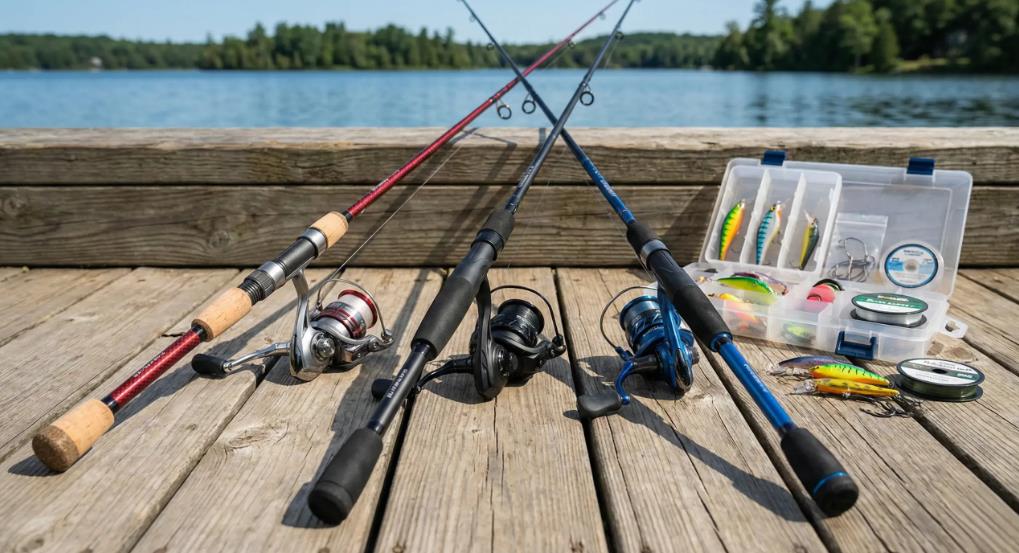
Hey guys, Tom here. If you’re reading this, you’re probably one of the many friends who’ve blown up my phone lately asking, “Tom, what’s the best fishing rod for a beginner?” I get it—walking into a tackle shop or scrolling Amazon in 2026 is overwhelming. You’re hit with a wall of jargon: “spinning vs. spincast,” “medium power,” “graphite blanks,” and enough brands to make your head spin. I’ve been there, trust me. Back in 2001, I bought my first rod for $20 at a discount store, thought it was the best thing since sliced bread… until it snapped mid-fight with a 2-pound bass. That’s when I learned: the right beginner rod isn’t the fanciest or most expensive—it’s the one that’s forgiving, versatile, and fits how YOU fish.
I’ve spent 25 years chasing bass in freshwater lakes, trout in mountain streams, and even the occasional redfish along the coast. I’ve tested cheap rods, high-end rods, and everything in between. And over time, I’ve narrowed down the 5 best rods for beginners in 2026—no fluff, no sponsored garbage, just straight talk from a guy who’s made every mistake so you don’t have to. I’ll break down each rod, why it works for new anglers, and throw in my personal war stories (and mistakes) to help you avoid the same pitfalls I did.
First, let’s get one thing straight: beginners don’t need a “specialized” rod. You don’t need a bass-specific rod if you’re not sure if you’ll love bass fishing, and you don’t need a saltwater rod if you’re only fishing your local pond. The goal is to start with a rod that’s versatile enough to handle most situations, durable enough to survive your learning curve, and easy enough to use that you don’t get frustrated and quit. Save the fancy gear for later—once you’re hooked (pun intended), you can upgrade. For now, let’s focus on rods that will make your first season on the water fun, successful, and pain-free.
First: The Beginner Basics (Skip This If You Want to Waste Money)
Before we dive into the rods, let’s cover 3 non-negotiables I wish someone told me when I started. These are the rules I now drill into every new angler I take out—break them, and you’ll end up with a rod that collects dust in your garage.
- Spinning Rods > Baitcasting Rods (For Beginners): Baitcasting rods are cool, sure—they look like the pros use. But they’re finicky. I spent 6 months tangling my line (we call that a “bird’s nest”) before I got the hang of it. Spinning rods? They’re foolproof. The reel hangs below the rod, you use your index finger to control the line, and even if you mess up, the tangles are easy to fix. Spincast rods (push-button) are even simpler—great for kids or anyone who wants zero learning curve—but they’re less versatile. Stick with a spinning rod if you want to grow into different fishing styles later.
- Length Matters (But Not How You Think): Most beginners think longer = better, but that’s a myth. A 6’6” to 7’ spinning rod is the sweet spot. I started with a 7’6” rod and could barely cast it without hitting trees—too long, too heavy. A 6’6” rod is short enough to control in tight spots (like around docks or trees) but long enough to cast far enough to reach fish. Avoid anything shorter than 6’ (too little casting distance) or longer than 7’ (too unwieldy for new hands).
- Medium Power = Versatility: Rod power (how stiff the rod is) is labeled ultra-light, light, medium, medium-heavy, heavy. For beginners, medium power is king. It’s stiff enough to handle small bass, trout, and panfish, but flexible enough to feel when a fish bites (critical for learning!) and forgiving if you set the hook too hard. Ultra-light is great for tiny trout but will snap if you hook a bigger fish. Medium-heavy is overkill—you’ll struggle to feel small bites, which is how you learn.
Pro tip from me: I once bought an ultra-light rod because I thought it was “easier” to cast. First trip out, I hooked a 3-pound catfish, and the rod bent so far I thought it would snap. I landed the fish, but the rod was never the same. Save yourself the hassle—start medium.
The 5 Best Fishing Rods for Beginners (2026) – My Personal Picks
These rods are tested, trusted, and proven to work for new anglers. I’ve fished with each of these (some I still use for casual trips), and I’ve recommended them to dozens of friends—all of whom are now hooked. I’ll rank them from best overall to best budget, with honest pros, cons, and my personal experience with each.
1. Best Overall: St. Croix Triumph Spinning Rod (7’ Medium)
If I could only recommend one rod to every beginner, this is it. St. Croix is a premium brand, but the Triumph series is their budget-friendly line—and it’s worth every penny. I’ve had my 7’ medium Triumph for 3 years now, and it’s still my go-to for casual freshwater trips. Here’s why it’s perfect for beginners:
First, the material: It’s made with premium SCII graphite, which is lightweight (so your arm won’t get tired after 2 hours of casting) but strong enough to handle fish up to 10 pounds. I once hooked a 7-pound bass in Lake Michigan with this rod, and it handled the fight like a champ—no bending, no flexing, just smooth control. The cork handle is comfortable (way better than plastic) and gives you a good grip even when your hands are wet—critical when you’re nervous and reeling in your first big fish.
The guides are hard aluminum-oxide with black frames, which means they’re smooth (no line friction) and won’t rust—even if you accidentally get them wet with saltwater (I’ve done that, oops). The action is medium-fast, which means the tip is flexible enough to feel tiny bites (I once felt a bluegill nibble a worm—something I never would’ve felt with a stiffer rod) but stiff enough to set the hook cleanly.
My personal experience: I lent this rod to my buddy Jake, who’d never fished before. On his first cast, he hooked a 2-pound crappie, and he was able to reel it in without me helping. He was hooked (literally and figuratively) and bought the same rod the next day. The only downside? It’s a bit pricier than some budget options ($120–$150), but it’s built to last—this rod will take you from beginner to intermediate without needing an upgrade.
Who it’s for: Beginners who want a rod that’s versatile, durable, and will grow with them. Great for freshwater (bass, trout, panfish) and even light saltwater (inlets, small redfish).
2. Best Budget: Shakespeare Ugly Stik GX2 Spinning Rod (6’6” Medium)
Let’s be real—some of you don’t want to drop $100+ on a rod until you’re sure you love fishing. I get that. Back in the day, my first “good” rod was an Ugly Stik, and it’s still a legend for beginners. The Ugly Stik GX2 is the 2026 update, and it’s even better than the one I had.
The GX2 is built like a tank—Shakespeare’s “Ugly Tech” blank (fiberglass and graphite blend) is virtually unbreakable. I’ve dropped this rod in the mud, banged it against rocks, and even stepped on it (don’t ask) and it still works like new. For beginners, that’s a game-changer—you’re going to make mistakes, and you don’t want a rod that breaks because you dropped it.
It’s 6’6” medium power, which is perfect for beginners—easy to control, great for casting, and versatile enough for most freshwater fish. The EVA handle is comfortable, and the guides are stainless steel, so no rust. The action is medium, which is forgiving for new anglers—if you set the hook too hard, the rod will flex instead of snapping the line.
My personal experience: I keep one of these in my truck for impromptu fishing trips. Last summer, I took my nephew (10 years old) fishing, and he used this rod. He cast it into a tree, pulled it free, and kept fishing—no damage, no tangles (well, a few tangles, but that’s part of learning). He caught his first trout with it, and now he begs me to take him fishing every weekend. At $50–$70, this is the best budget rod you can buy—you won’t regret it.
Who it’s for: Beginners on a budget, kids, or anyone who wants a durable rod that can handle mistakes.
3. Best for Portability: PLUSINNO Carbon Fiber Telescopic Spinning Rod (7’ Medium)
If you’re someone who likes to fish on the go—hiking to mountain streams, camping, or traveling—this is the rod for you. I got this rod last year for a camping trip to Colorado, and it’s been a lifesaver. It telescopes down to 18 inches, so it fits in a backpack or even a glove box—no need for a big rod case.
Don’t let the telescopic design fool you—it’s durable. It’s made with 24-ton carbon fiber, which is lightweight (only 8 ounces!) but strong enough to handle fish up to 8 pounds. I caught a 5-pound rainbow trout in a Colorado stream with this rod, and it handled the fight perfectly. The guides are stainless steel, and the EVA handle is comfortable for long days on the water.
The best part? It comes with a complete kit—rod, reel, line, lures, hooks, and a carrying bag. So you don’t have to buy anything else—just grab it and go. For beginners, that’s a huge plus—no guesswork about what reel to pair with the rod.
My personal experience: I once hiked 2 miles to a remote stream with this rod in my backpack. When I got there, I set it up in 2 minutes, cast, and hooked a trout within 5 minutes. It’s perfect for anyone who doesn’t want to carry a big rod, and it’s still versatile enough for most fishing situations. The only downside? Telescopic rods can be a bit less sensitive than one-piece rods, but for beginners, that’s not a big issue.
Who it’s for: Beginners who fish on the go, campers, hikers, or anyone who wants a portable, all-in-one kit.
4. Best for Kids/Beginners Who Want Simplicity: Zebco Dock Demon Spincast Combo (6’ Medium)
If you’re teaching a kid to fish, or if you want a rod that’s so simple even your grandma can use it, this is the one. Spincast rods are push-button—you press the button, hold it, swing, and release. No tangles, no complicated setup—just cast and fish.
The Zebco Dock Demon is the best spincast combo for beginners in 2026. It’s 6’ medium power, with a fiberglass blank that’s durable and forgiving. The reel is pre-spooled with 10-pound line, so you don’t have to mess with threading line. The EVA handle is comfortable for small hands, and the rod is lightweight enough for kids to hold for hours.
My personal experience: I bought this for my 8-year-old niece, and she caught her first bluegill within 10 minutes of using it. The push-button design is foolproof—she never tangled the line, and she was able to cast it on her own after 2 tries. It’s also affordable ($25–$30), so if she loses interest, you didn’t waste a lot of money. I even use it sometimes when I’m fishing off a dock—simple, easy, and effective.
Who it’s for: Kids, absolute beginners, or anyone who wants a no-fuss, push-button rod.
5. Best for Light Saltwater: Fenwick HMG Spinning Rod (7’ Medium)
If you’re lucky enough to fish near the coast (like I do in Florida), you’ll need a rod that can handle saltwater. Saltwater is harsh—corrosion, big waves, and bigger fish—so you need a rod that’s built for it. The Fenwick HMG is my go-to for light saltwater fishing, and it’s perfect for beginners who want to try coastal fishing.
It’s made with carbon-bound blanks spiraled with carbon thread, which is strong, lightweight, and corrosion-resistant. The Fuji line guides have alconite inserts, which hold up well in saltwater and work with both braided and monofilament line. The cork handle is premium, and the reel seat is secure—no slipping when you’re fighting a fish.
I use this rod for redfish, snook, and small tarpon in the inlets. It’s 7’ medium power, so it’s versatile enough to handle both saltwater and freshwater (I’ve used it for bass too). The action is fast, so you can feel bites even in choppy water, and it’s stiff enough to set the hook in a fish’s tough mouth.
My personal experience: Last winter, I took a beginner friend fishing in the inlet, and he used this rod. He hooked a 3-pound redfish, and even though he was nervous, the rod gave him enough control to reel it in. The saltwater didn’t damage the guides or the reel—just rinse it off after use, and it’s good to go. It’s a bit pricier ($100–$160), but if you’re fishing saltwater, it’s worth it—cheaper rods will rust and break quickly.
Who it’s for: Beginners who fish in saltwater (inlets, beaches) or want a rod that can handle both salt and freshwater.
Tom’s Pro Tips for Beginners (From 25 Years of Mistakes)
Even with the best rod, you’re going to make mistakes—that’s part of learning. Here are the lessons I wish I’d learned earlier, so you can avoid the frustration I felt:
- Don’t Buy a “Combo” Unless It’s One of the Ones I Listed: Most cheap combos (under $20) are junk. The reel will break, the line will snap, and you’ll get frustrated. Stick to the combos above—they’re affordable but quality.
- Learn to Tie a Palomar Knot: This is the simplest, strongest knot for beginners. I still use it 25 years later. Watch a 2-minute YouTube video—you’ll be tying it in 5 minutes. A bad knot will cost you more fish than a bad rod.
- Keep It Simple: You don’t need 10 lures. Start with a worm and a bobber—they catch almost every freshwater fish. I’ve caught bass, trout, and bluegill with nothing but a nightcrawler and a bobber. Save the fancy lures for later.
- Clean Your Rod After Every Trip: Rinse it with fresh water (especially if you fished saltwater), dry it off, and store it in a cool, dry place. This will make your rod last for years. I still have my first Ugly Stik from 2005—it’s beat up, but it still works because I take care of it.
- Don’t Get Discouraged: I went 3 weeks without catching a fish when I first started. I almost quit. But then I caught a tiny bluegill, and I was hooked. Every angler has slow days—just keep casting. The more you fish, the better you’ll get.
Final Thoughts – What Rod Should You Buy?
If you’re still unsure, here’s my quick breakdown:
- Best overall: St. Croix Triumph (versatile, durable, grows with you).
- Best budget: Shakespeare Ugly Stik GX2 (unbreakable, affordable).
- Best portable: PLUSINNO Telescopic (perfect for on-the-go).
- Best for kids: Zebco Dock Demon (simple, push-button).
- Best for saltwater: Fenwick HMG (corrosion-resistant, strong).
At the end of the day, the best rod for you is the one you’ll actually use. Don’t overcomplicate it—pick one of these, grab a worm, and head to the water. Trust me, there’s nothing better than reeling in your first fish, and these rods will help you do that.
If you have any questions, hit me up. I’m always happy to take a beginner out fishing—nothing makes me happier than seeing someone catch their first fish. And if you end up buying one of these rods, let me know how it goes. Happy fishing, guys—tight lines!
– Tom, Your Local Fishing Guy