Why the oldest lure in your tackle box may still be your best chance at a trophy pike or muskie.
Certain age-old questions persist in fishing. For example, if you could only use one lure for a specific species of fish, what would it be? The jig often ranks number one when discussing walleyes, bluegills, crappies, and perch. The jig also has honorable-mention status among the smallmouth bass crowd. When it comes to pike and muskies, however, the bucktail stands atop the list and for good reason.
Bucktails have been around forever. While evolving with the times, they’ve not strayed far from their roots. Most Esox anglers grew up catching fish on bucktails. A high confidence level exists with these baits. They’re versatile and catch both numbers and trophy-caliber fish. Plus, no matter where you throw them or how you work them, there’s always a chance they’ll get eaten by a pike or muskie.
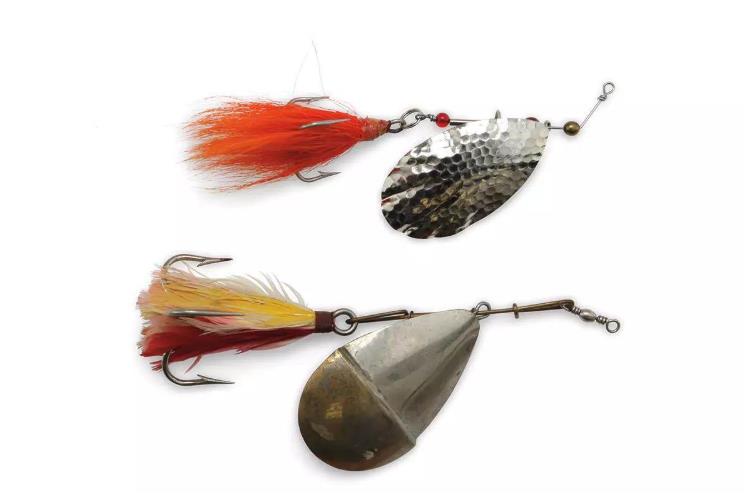
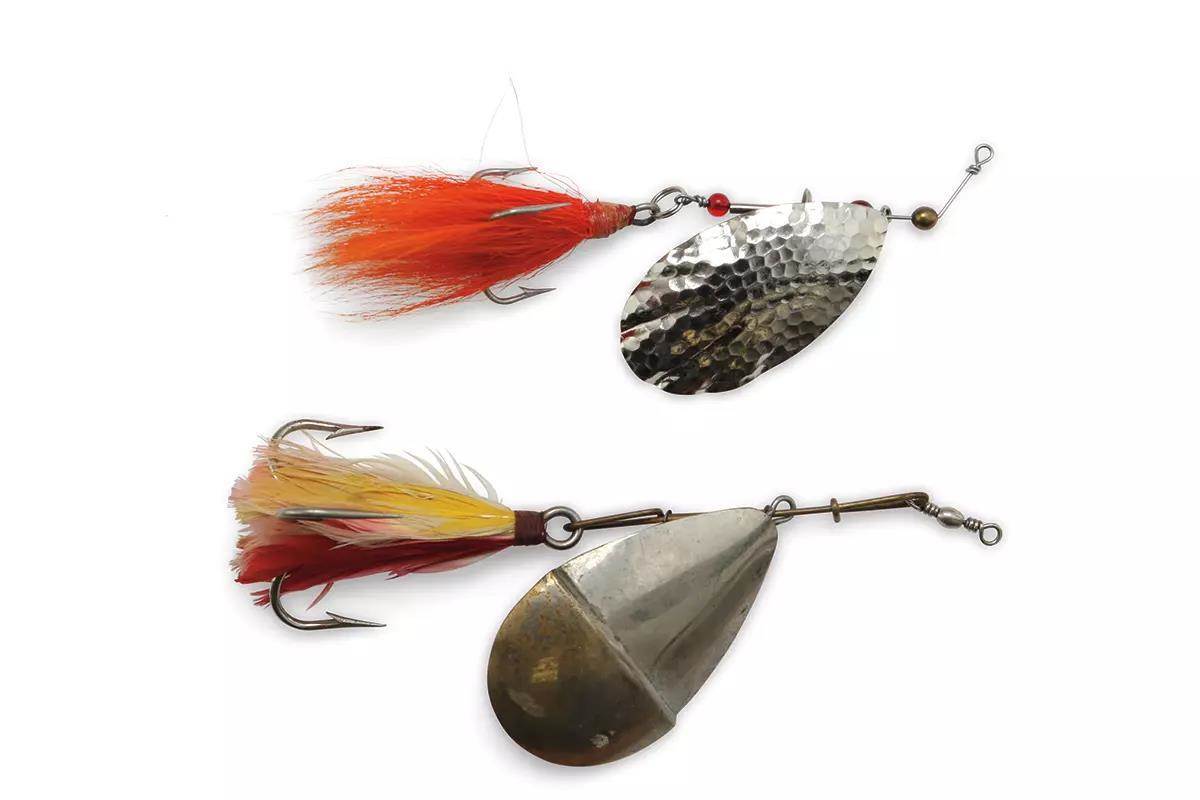
While the exact origin of bucktails may be debatable, they date back more than a century and perhaps to the 1850s. Julio T. Buel is credited with holding the first U.S. patent for a fishing lure. The bait was registered in 1852 and included traits later incorporated into his spinners. The patent description is captioned as an “Improvement in spinning bait to catch fish.” Buel’s company would go on to make several models of “trolling spoons,” which closely resemble modern-day bucktails. They were produced in multiple sizes, with fluted metal blades spinning on a thick wire shaft. A feather-dressed treble hook was attached via a twisted wire clip at the opposite end of the lure’s shaft.
Buel’s lure company traded hands multiple times and eventually landed with Eppinger Manufacturing in 1967. Eppinger, the maker of legendary Dardevle spoons, continued to produce the Buel Spinner for decades in its original form without a blade clevis. Eppinger would later introduce their own refined Osprey Notangle Spinner. This bait has a unique metal body and bent shaft above its clevis to eliminate line twist. It serves as an example of the bucktail tradition continuing and evolving through time.
Buel provided impetus for other bucktail-style baits that followed in quick succession. In 1873, G.M. Skinner was churning out his popular brand of pike trolling spinners from his Clayton, N.Y., workshop. Not to be outdone, by the early 1890s William T.J. Lowe, a Buffalo, N.Y., silversmith, was marketing high-quality in-line spinners. His eye-catching models included the Star Bait, with a genuine gold and silver-plated blade for varying light conditions, along with a multi-fluted blade model for maximum flash, and the Eclipse model with a rapidly rotating wave blade that collapsed against the lure’s shaft when a fish bit. All were equipped with the finest English hooks and smooth spinning swivels. Their 1892 advertisement would be the envy of any marketing company even today.
Companies producing similar lures popped up across the country, and Esox anglers row-trolled them for world-record-size pike and muskies. Without clevises, their large heavy blades didn’t spin freely on thick wire shafts, and feathers were the primary dressing material on oversized stainless-steel treble hooks.
William Lowe’s tackle company was sold to Pflueger after his passing in 1915. Pflueger continued to churn out these lures and its popular baitcasting reels from its plants in Akron, Ohio—with several major speed bumps as the country suffered through a pandemic, a Great Depression, World Wars I and II, all in a span of 30 years. However, about the time that Time Magazine was photographing a sailor kissing a stranger in Time Square on V-J Day, bucktails were flying high in the Northwoods of Wisconsin for trophy pike and muskies.
Bucktails Take Off
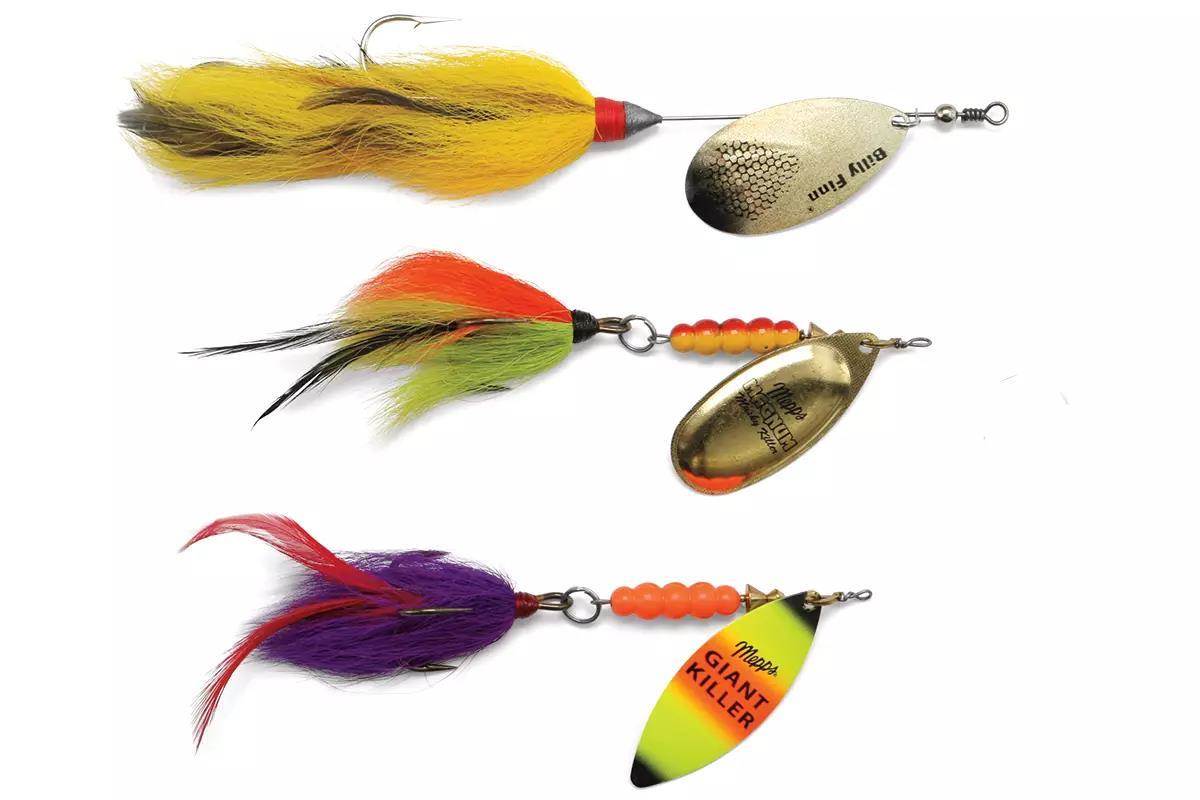
The arms race of bucktails kicked off in Hayward, Wis., when muskie guide Bill Gautsche introduced his unique Billy Finn in-line bucktail in 1946 to rival the popular G.M. Skinner spinners. Tony Burmek of Milwaukee was also guiding the fabled waters and followed suit with his own line of bucktail spinners that he peddled to customers in the 1950s. These baits were akin to the lures we throw today, with blades on free-spinning clevises and natural deer hair dressings.
The biggest driver in the spinner market was just getting started, however, and wouldn’t dominate the bucktail market until the early 1960s when Sheldon’s Inc. became the driving force behind the large-scale distribution of Mepps bucktail (and squirrel tail) spinners throughout the United States. Prior to that time, the original undressed Mepps Shimmer was produced under a 1938 French patent issued to Andre Meulnart, an engineer for automaker Peugeot. It gained attention in America after Frank Velek returned home from WWII and gave several Mepps spinners to Todd Sheldon, the owner of a tackle shop in Antigo, Wis. Sheldon had a couple strokes of luck or genius along the way and the rest is history.
Mepps took the lead and outpaced all other bucktail manufacturers when it launched its wildly effective Mepps Musky Killer bucktail in 1961 and then upsized it further with the Magnum Musky Killer in 1972. In time, other muskie guides and anglers successfully added to the inventory of traditional pike and muskie bucktails, including Mark Windel’s Harassers, Fred Hirsch’s Ghost Tails, George Wahl’s Eagle Tails, and Joe Bucher’s Buchertails. All these baits are still on the market and catching fish to this day.
Innovations Continue
This leads us to another timeless question in fishing. Why do we keep buying new lures each year, when the classics worked perfectly fine? The answer to this question is complex. Yes, trophy pike and muskie anglers are often chasing the latest and greatest baits, but you only get so many shots at trophy fish throughout the season, or in a fishing career, for that matter. Fish can become conditioned, and even slight differences in baits can make a difference in triggering fish. At other times, there are monumental changes in the landscape of fishing lures, and to ignore them is lunacy.
Such was the case one fall evening in 2003 when Carrie Hoppe assembled the first Showgirl bucktail with scrap purple Flashabou material and a gold blade. Her husband Brad Hoppe took the bait out on Mille Lacs Lake the next morning and proceeded to catch monster muskies on it. The rest is history, in this simplified version of events. Actually, Carrie and Brad Hoppe, as owners of Musky Mayhem Tackle LLC, had been extensively testing various bucktail configurations and materials prior to settling on Flashabou and the exact specifications of the Showgirl bucktail. Considerably more work and field testing went into expanding their product line to the Cowgirl and Double Cowgirl. It didn’t hurt that Mille Lacs and central Minnesota were at the zenith of giant muskies, and these trophy fish had an unsatiable appetite for Flashabou, and the designs put out by Brad and Carrie.
The dominance of Flashabou bucktails continues today. If you resisted this milestone in bucktail history, you missed an opportunity to be more effective on the water. A compelling case still exists, however, for more traditional bucktail hair spinners, while keeping an open mind for the next game-changer on the market. Musky Mayhem Tackle offers several examples of why you shouldn’t ignore the past in pursuit of your next trophy muskie.
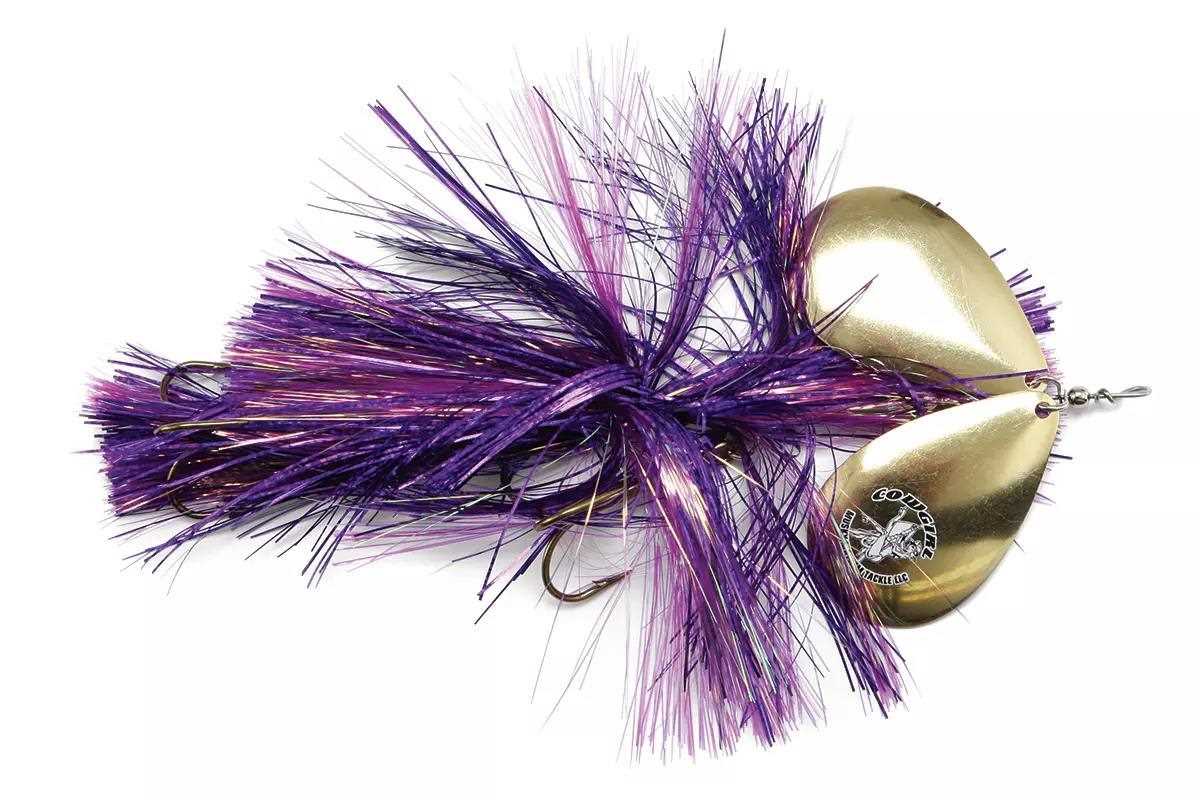
Prior to the advent of Showgirls and Cowgirls, Musky Mayhem marketed the venerable Eagle Tail bucktail, which had accounted for more 50-inch muskies than any other bait in the history of Muskies, Inc. The Eagle Tail continues to be a strong seller to this day due to its single #9 fluted blade, Siwash hooks, and natural deer-tail dressing. The #9 blade pulls easily through the water with maximum flash, while the single hooks slide through weeds more efficiently than trebles. The natural hair breathes nicely without oversizing the bait’s profile. Each of these three components is significant, but collectively they complement each other for a perfectly balanced bait, in a size and profile that’s effective throughout the entire muskie season.
As quality deer tails have become harder to source, more expensive, and less uniform, companies like Musky Mayhem have turned to other natural materials such as marabou feathers for a traditional bucktail feel. Their Single Girl features a #8 fluted blade and is dressed in an attractive combination of marabou and Flashabou material. Their Electric Bunny bucktail has double magnum #8 blades and the same marabou and Flashabou dressing. These more subtle baits behave much like traditional bucktails. They ride higher in the water column with increased blade vibration yet possess the attractive flare and billowing action from the synthetic material. They’re standout baits when confronting pressured muskies.
On the Topic of Downsizing
Further downsizing on the hybrid bucktail theme, Mepps has capitalized with its Bronze Slammer bucktail series. These baits feature hand-painted blades and bodies to mimic the forage in most any environment. They sport premium bucktail skirts with extra-long Flashabou tail dressing for greater pulsing action. With a single size-5 French blade, the Bronze Slammer is ideal for trophy pike and early-season muskies.
On the topic of downsizing, if you’ve been in the Esox game long enough, you may have trays of underutilized spinners with blades in the size-4 to size-6 range. These baits are a gold mine for pike and muskies in spillways and small-river settings. When the forage base is small, Esox can be incredibly size selective, ignoring larger baits but inhaling bite-size ones.
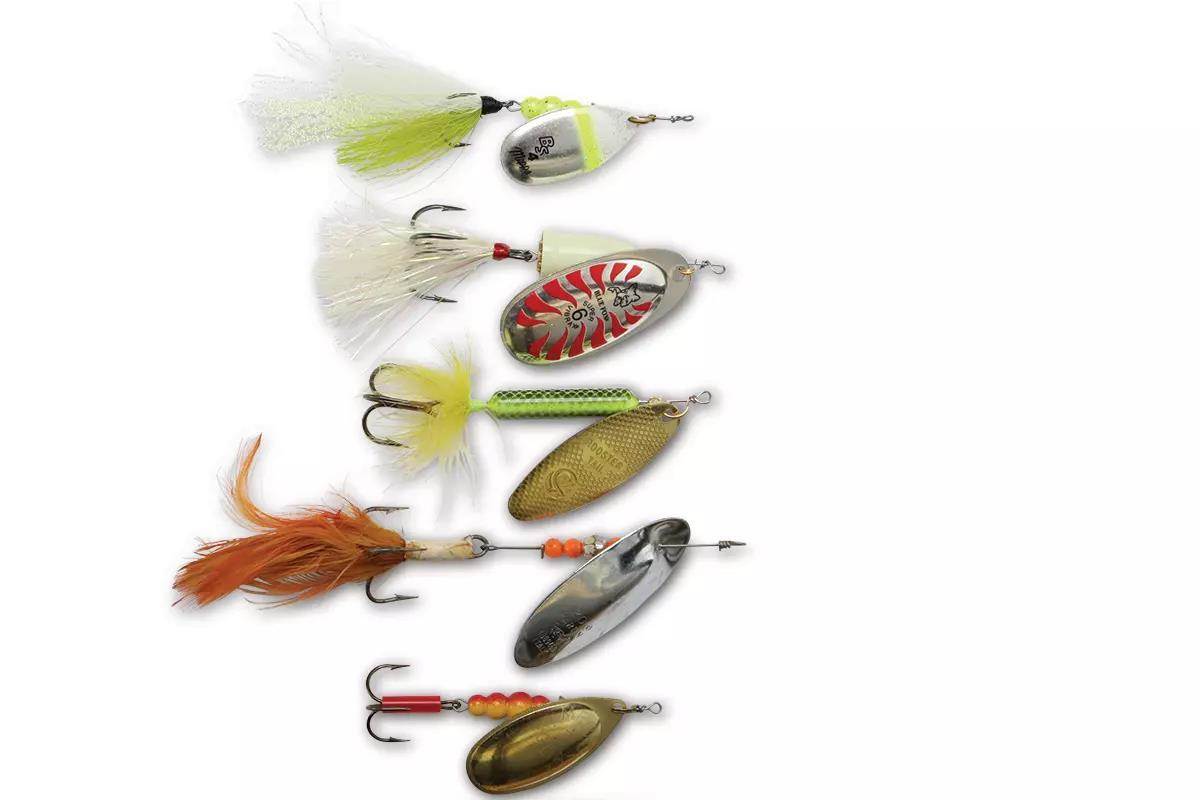
In stained or turbulent water, look to bucktails with noise-making features. The leading bucktail in this category is the Blue Fox Vibrax spinner. With a two-piece, bell-shaped brass body construction and free-turning inner gear body, the spinner emits noise as the two pieces vibrate against each other with the spinning of the blade. The heavy brass construction allows them to sink quickly and ride deeper in the water column. The size-4 and size-5 models work especially well in fast-flowing settings. Adjust to smaller or larger sizes, depending on water depth and current speed. Metallic and UV color patterns work well on sunny days, and brightly painted combinations present well under cloudy conditions.
Other bucktails that work well in current settings include Worden’s Rooster Tail and Panther Martin spinners—both equipped with modified willow blades that rotate more quickly, closer to the shaft of the lure. This generates less lift. These brands are closely associated with trout fishing. However, the Rooster Tail is available in 3/4- and 1-ounce sizes with hackle tail attractants that drive pike crazy, and Panther Martin has several pike and muskie size models in the 3/4- to 11/4-ounce range that sport deer hair and marabou dressings in an array of attractive colors.
The discontinued Vibrax #6 tandem bucktail remains a favorite of mine for early-season muskies, and I snatch them up whenever available. The slight extra bulk from two deer-hair bucktails on an otherwise small bait connects with leery muskies nipping at the back of bigger baits, especially on waters with intense angling pressure. Muskies can become shellshocked when presented with a daily barrage of double 10 magnum bucktails. There’s something about a mid-sized bucktail that gets them going. The Mepps Tandem Muskie Killer fits this same billing perfectly, and since the bait is still in production, you can choose from array of blade and skirt color configurations.
Another bait that I need to mention is an undressed Mepps 5 Aglia spinner. As a young angler targeting trophy pike in Canada, I learned valuable lessons from a particular lodge owner who consistently caught more trophy pike than anyone else. Cycling through bucktails was high on his list. If a key spot didn’t produce, he fished it from a different angle or at a different time of day. Each time he covered it from the outside edge inward and worked it top to bottom.
He almost always worked an undressed Mepps 5 Aglia spinner into his lure rotation. Sometimes the spinner was tipped with a 2-inch curly tail grub or a walleye gullet strip, but the trailer was always kept small. Running bare, this bait would routinely catch some of the biggest pike of the season. With maximum flash and speed, this diminutive bait intrigued pike enough to get bit at an alarming rate. The gold-bladed version produced slightly better than others in tannic stained waters, but the silver, copper, fire tiger and most every other color/blade combination worked well. The undressed #5 Mepps Aglia remains my fallback pike spinner to this day.
More Details and Designs
If small blades can have a significant triggering effect, Wicked Deadly Outdoors (WDO) hit a home run with its Variant bucktail. The Variant has the positive attributes of most modern bucktails with large, staggered #8 and #10 magnum blades and a full bellowing Flashabou skirt. Its uniqueness comes from a small trailing blade that rides beyond the end of the bucktail on a single solid through-wire. The tiny trailing blade spins at a higher rate than the lumbering main blades. This creates an illusion of the lure moving away at a much quicker rate than its actual speed. With rush-feeding Esox, this translates into more solid takes from fish and less lazy follows or short takes.
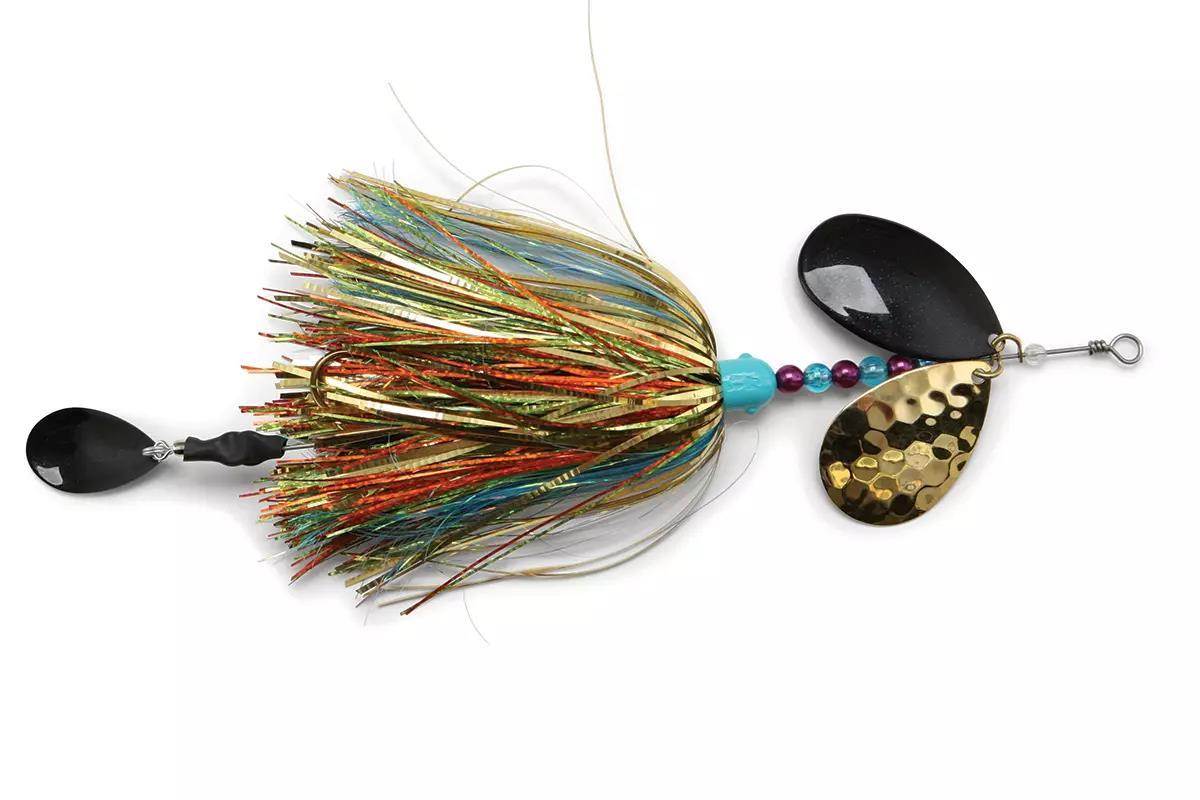
The Variant has blended tinsel with Hedron Flashabou scale mixed in for a more reflective skirt. The clevises are also preset to ensure blades instantly engage at the start of each retrieve. Small details are what set apart modern bucktails from each other. WDO has gone one step further with a second version of the Variant bucktail called the Variant Twin Tail. It has the opposite triggering mechanism, with an extra-large proprietary twin-tail grub trailer. The long twin tails continue to twist and taunt, even when the retrieve slows. The blades may momentarily stop spinning on the pause, but the tail continues to impart action and entice muskies to strike.
If the ability to slow a bucktail and still ride high over shallow weeds interests you, Spanky Baits has provided the answer in the form of its Pugsly 8, a compact, single #8 bladed Flashabou bucktail with a hard resin body—a significant modification to the traditional bucktail. The resin body adds tremendous buoyancy and makes it ideal for slow-rolling over the top of thick weed beds.
When an extra foot or two of depth is desired from a more natural bait, Spanky Baits has the answer with its customizable Raven bucktail. This marabou bucktail fills the gap created as institutional bucktails like the Shumway Flasher seemingly disappear from the market. The Raven features double 8/0 magnum blades. It flaunts an extra robust marabou body and tinsel teaser tail. The natural marabou material is dyed with vibrant colors and tied in layers for a fuller appearance, yet marabou offers less water resistance for an easier pulling and a higher-riding bucktail. This bait is fully customizable on Spanky’s website, as are all their bucktails, with anglers selecting their own blade and skirt colors.
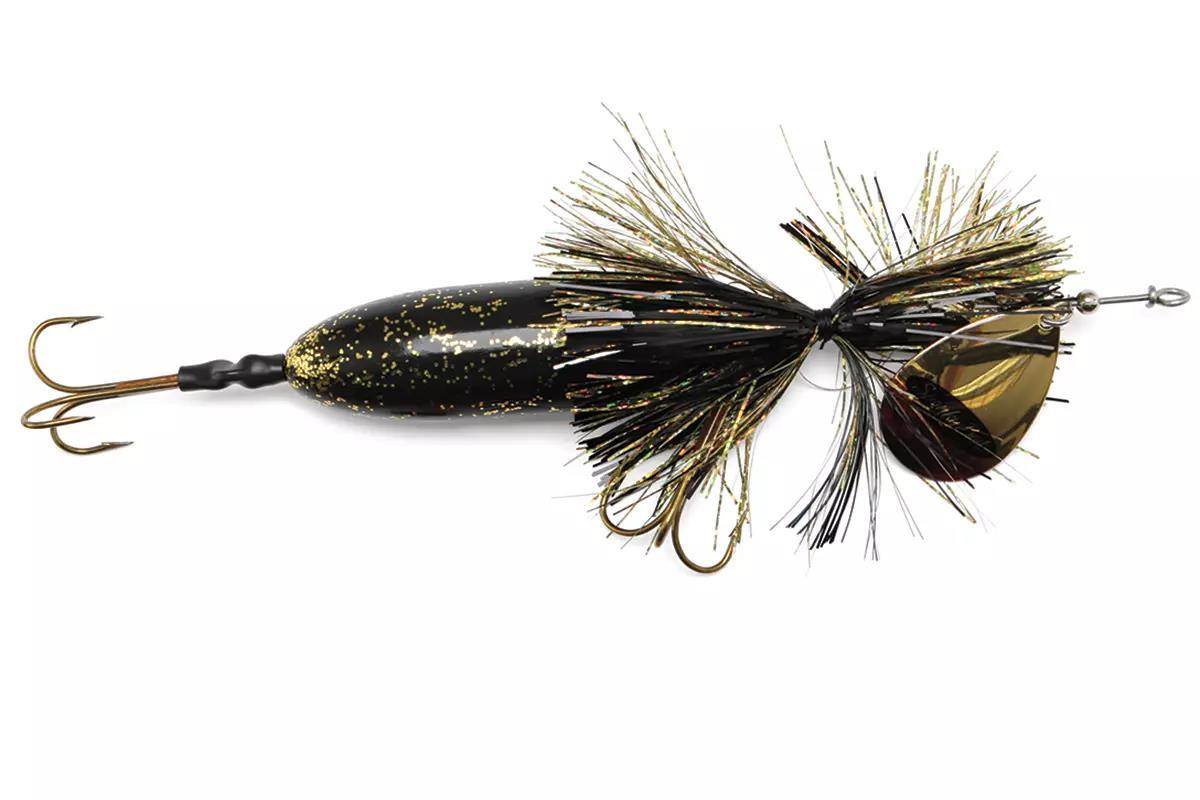
As has happened through the decades, new bucktails have come along and improved on their predecessors. In the case of the Raven and all other Spanky bucktails, upgrades include the heaviest available .072-inch-diameter through-wire construction, thicker blades for greater durability, and a distinctive pitch during their rotation, as well as a nylon washer added below the clevis to prevent premature wear and to ensure smoothly spinning blades. Spanky bucktails universally perform as both casting and trolling baits.
A brief look at the history of bucktails instills a greater appreciation and understanding of these remarkably effective lures. While older and smaller models remain strong fish catchers, staying current with the latest and greatest developments and new baits offers the best of both worlds—old and new—and builds a deadly Esox bucktail arsenal full of go-to options.