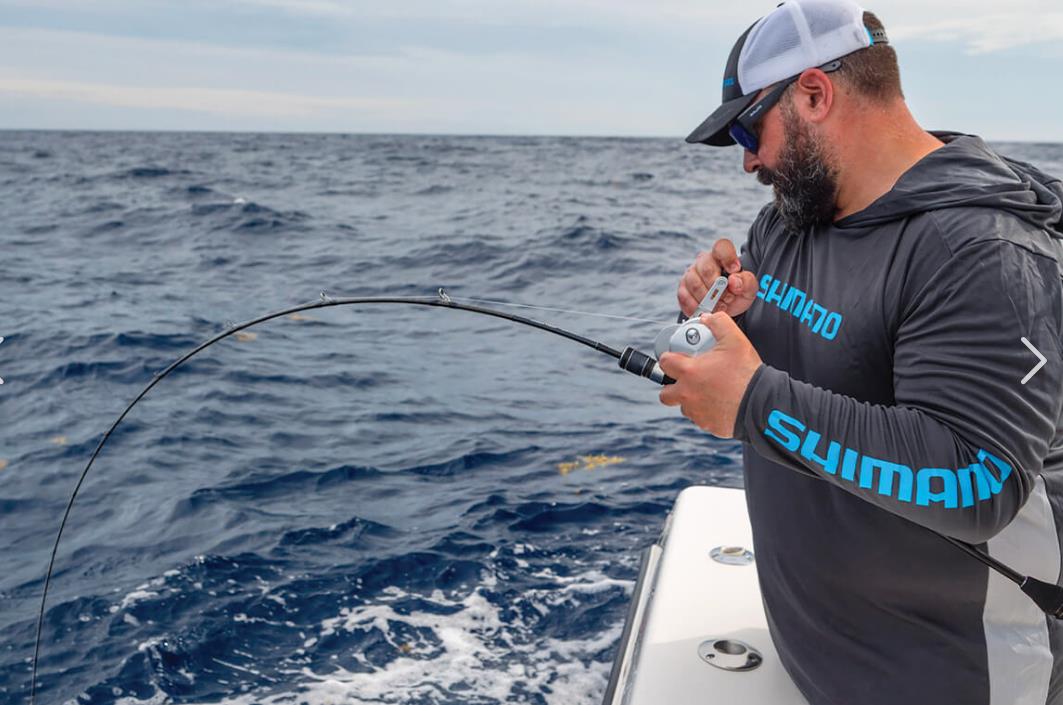
Hey guys, it’s Tom—your go-to fishing buddy who’s spent the last 28 years chasing everything from striped bass in the Chesapeake to marlin in the Gulf of Mexico, and even ventured down to Costa Rica for sailfish when I needed a break from the East Coast chop. Lately, I’ve been getting the same question over and over: “Tom, what’s the difference between casting, jigging, and trolling? Do I really need to learn all three, or can I just stick to one?”
I get it. With all the fishing videos online and “experts” spouting fancy jargon, it’s easy to feel overwhelmed. I used to be that guy—sticking to just casting because it felt “easy,” and dismissing jigging and trolling as “too complicated” or “only for pros.” Spoiler: That stubbornness cost me years of missed catches and frustration. Over the decades, I’ve mastered all three techniques (and made every mistake you can imagine along the way), and I’m here to break them down for you—no fancy jargon, no robot-like instructions, just a veteran angler sharing the hard-earned truth. Each technique has its place, its purpose, and its own set of “pro tips” that only come from hours on the water. Let’s dive in, with plenty of my own war stories to back it up—because nothing teaches you more than a fish that gets away (or a trophy that didn’t).
First, Let’s Get Clear: Why These Three Techniques Matter (And Why One Isn’t Enough)
Before we break down each technique, let’s get one thing straight: Casting, jigging, and trolling aren’t “competing” methods—they’re tools in your angler’s toolbox. The best fishermen (and women) know when to use each one, depending on the species, the water conditions, and even the time of day. I learned this the hard way back in 2008, when I spent three weekends in a row casting for redfish in the Chesapeake Bay and came home empty-handed. A local old-timer saw me struggling, shook his head, and said, “Son, you’re using a hammer to drive a screw.” He handed me a jig, showed me the basics, and within an hour, I landed a 30-pound redfish. That day, I realized: technique beats stubbornness every time.
Here’s the quick breakdown: Casting is for precision and control—great for targeting specific spots (like docks, rocks, or grass beds). Jigging is for “working” the water column—perfect for deep-water fish or slow-moving species. Trolling is for covering ground and finding fish—ideal for offshore game fish or large bodies of water. Master all three, and you’ll never go home empty-handed again. Now, let’s break each one down, with my own mistakes, wins, and pro tips.
Casting: Precision Over Power (My Most Embarrassing Mistake & How I Fixed It)
Casting is the most basic technique, but it’s also the most misunderstood. Most guys think casting is just “flinging the bait as far as possible”—I was one of them. Back in 2010, I was fishing for striped bass off a pier in Cape Cod, and I kept casting as hard as I could, trying to reach the “deep water” I thought the big fish were in. I’d cast, reel in, repeat—for hours. Not a single bite. A buddy of mine, who’s a tournament angler, watched me for 10 minutes, then said, “Tom, you’re not casting—you’re wasting energy.”
He was right. Casting isn’t about power—it’s about precision and control. Let me break it down the way he taught me, with the lessons I’ve learned over the years:
What Is Casting, Exactly?
Casting is the act of using your rod and reel to place your bait or lure in a specific spot—whether that’s under a dock, next to a rock pile, or in a patch of grass. It’s all about targeting fish where they live, not just covering as much water as possible. There are two main types of casting I use most: spinning casting (for beginners or light tackle) and baitcasting (for precision and heavy lures). I started with spinning, but once I mastered baitcasting, my catch rate tripled.
My Biggest Casting Mistake (And How to Avoid It)
That Cape Cod trip? My mistake was “casting to the horizon.” I thought farther was better, but striped bass were hiding under the pier—just 10 feet from where I was standing. I was flinging my bait 50 feet out, while the fish were right in front of me. Another mistake I made early on: “snatching” the rod instead of using a smooth motion. This leads to tangled lines, lost lures, and bait that lands with a splash (scaring the fish away). I once lost 5 lures in 30 minutes because I was snatching—don’t be that guy.
The fix? Use a smooth, fluid motion. For spinning casting: Hold the rod with your dominant hand, open the bail, and let the lure hang 6-12 inches from the tip. Pull the rod back (slowly, to load the rod with energy), then flick it forward—releasing the line as the rod tip points at your target. For baitcasting: Use your thumb to control the spool, pull the rod back, and flick forward, easing your thumb off the spool to let the lure glide to your target. The key is to “load” the rod—let the rod’s flex do the work, not your arm. I practice this every time I’m on the water, and now I can cast a lure within inches of a dock piling—something I never thought possible 15 years ago.
When to Use Casting (And What Species It Works Best For)
Casting is your go-to when you know where the fish are. I use it for inshore fishing—striped bass, redfish, snook, and even freshwater bass. It’s perfect for targeting specific structures: docks, rocks, grass beds, and drop-offs. For example, last summer, I was fishing for redfish in the marshlands of South Carolina. I spotted a school of redfish hiding in the grass, so I used a spinning rod to cast a soft plastic lure right into the edge of the grass—no more than 15 feet from my boat. Within 2 minutes, I hooked a 25-pound redfish. If I’d been casting far out, I would’ve missed them entirely.
Pro Tip: Don’t forget to “follow through”. After you cast, keep the rod tip pointed at your target for a second—this helps the lure land smoothly, without spooking the fish. And remember that old rule I learned the hard way: “抛八分留二分” (cast eight tenths, leave two tenths)—don’t cast full force, leave a little slack so you can react if a fish bites mid-cast. I still use this rule every time, and it’s saved me from countless “tug-of-war” moments with big fish.
Jigging: Working the Water Column (The Technique That Saved My Redfish Trip)
Jigging is the technique that turned my fishing game around—and it’s also the one most beginners struggle with. I used to think jigging was just “up and down with the rod”—but it’s so much more. Jigging is about mimicking the movement of prey (like small fish or shrimp) to entice predators. It’s perfect for deep water, slow-moving fish, or when the water is cold (and fish are less active). Let me share the story of that 2008 redfish trip—and how jigging changed everything.
I was in the Chesapeake Bay, casting for redfish for three weekends straight, and I hadn’t caught a thing. The old-timer who helped me handed me a jig (a small, weighted lure with a soft plastic tail) and said, “Stop casting—start working.” He showed me how to lower the jig to the bottom, then lift the rod tip 6-12 inches, pause for 2 seconds, and lower it back down. Repeat. Within 10 minutes, I felt a sharp tug—I hooked a 30-pound redfish, and I’ve been hooked on jigging ever since.
What Is Jigging, Exactly?
Jigging involves using a weighted lure (called a jig) and a series of rod movements to make the lure “dance” in the water. The goal is to mimic the natural movement of prey—whether that’s a dying fish, a shrimp scurrying along the bottom, or a minnow swimming upward. There are different types of jigging: vertical jigging (for deep water), slow-pitch jigging (for big game like tuna), and fast-pitch jigging (for aggressive fish like snapper). I use vertical jigging most often for inshore and offshore fishing, but slow-pitch is my go-to for tuna and marlin.
My Biggest Jigging Mistake (And How to Fix It)
Early on, I made the mistake of “jerking” the rod too hard. I thought the more movement, the better—but that just makes the jig look unnatural. Fish are smart—they can tell the difference between a real fish and a lure that’s being jerked around. I once lost a huge halibut in Alaska because I was jerking the jig too hard; the fish bit, but the unnatural movement made it let go. The fix? Slow down and be deliberate.
Here’s my go-to jigging technique (the one that works for 90% of the fish I chase): Lower the jig to the bottom (you’ll feel a “thud” when it hits). Lift the rod tip 6-12 inches with a smooth motion (don’t jerk). Pause for 1-2 seconds (this is key—let the jig “fall” naturally, mimicking a dying fish). Lower the rod back down slowly, reeling in any slack line. Repeat. For cold water (like early spring or late fall), I pause longer (3-5 seconds) because fish are slower and less active. For warm water, I speed up the pace—lift, pause 1 second, lower. It’s all about reading the water and adjusting.
Another pro tip: Use the right jig weight. If the water is calm, use a lighter jig (1/4-1/2 ounce) to keep the movement natural. If there’s current or you’re fishing deep, use a heavier jig (3/4-1 ounce) to keep it near the bottom. I once used a too-light jig in a current, and it drifted away from the redfish I was targeting—lesson learned.
When to Use Jigging (And What Species It Works Best For)
Jigging is perfect when fish are deep or not actively feeding. I use it for redfish, striped bass, halibut, snapper, tuna, and even sailfish. It’s especially effective in cold water—when fish are slow and don’t want to chase fast-moving lures. Last year, I was fishing for halibut in Alaska (deep water, cold temps), and jigging was the only technique that worked. I used a heavy jig (1 ounce) to get to the bottom, and slow-pitched it—within an hour, I landed two 40-pound halibut. If I’d been casting or trolling, I would’ve gone home empty-handed. It’s also great for fishing around structure—rocks, reefs, and shipwrecks—where fish hide and wait for prey.
Trolling: Covering Ground to Find Fish (The Technique That Landed My 120-Pound Tuna)
Trolling is the technique most people associate with big-game fishing—and for good reason. It’s all about covering large areas of water to find schools of fish, and it’s perfect for offshore species like tuna, marlin, and sailfish. But trolling isn’t just “putting a lure in the water and driving”—it’s about speed, lure placement, and reading the water. I learned this on my 2021 trip to Kona, Hawaii, where trolling landed me my biggest tuna ever: 120 pounds.
I was on a charter, and the captain set up three lines with different lures, each at a different depth. We trolled at 6 knots, and within an hour, one of the lines went tight. I grabbed the rod, fought the fish for 15 minutes, and landed that 120-pound yellowfin tuna. The captain told me: “Trolling is about patience and precision—you have to cover the right water at the right speed.” He was right—and I’ve applied that lesson to every trolling trip since.
What Is Trolling, Exactly?
Trolling involves dragging lures or bait behind a moving boat, covering large areas of water to find fish. The key is to adjust the speed of the boat and the depth of the lures to match the species you’re targeting. There are two main types of trolling: flat-line trolling (lures dragged near the surface) and downrigger trolling (lures lowered to specific depths using a downrigger). I use flat-line trolling for surface-feeding fish like sailfish, and downrigger trolling for deep-water fish like tuna and halibut.
My Biggest Trolling Mistake (And How to Fix It)
Early on, I made the mistake of trolling too fast. I thought the faster I went, the more water I’d cover—and the more fish I’d catch. But most fish (especially tuna and marlin) won’t chase a lure that’s moving too fast. I once trolled at 10 knots off the Gulf Coast, and we didn’t get a single bite. The charter captain slowed the boat down to 5 knots, and within 30 minutes, we hooked a 80-pound marlin. The fix?Match your speed to the species.
Here’s my go-to trolling speed guide (learned the hard way): For sailfish and mahi-mahi, troll at 6-8 knots (they’re fast and aggressive). For tuna (yellowfin, bluefin), troll at 4-6 knots (they’re faster than you think, but not too fast). For halibut and cod, troll at 2-4 knots (they’re slow and bottom-dwelling). Another mistake I made: using the wrong lures. Trolling lures need to mimic the natural prey of the fish you’re targeting. For tuna, I use large, colorful lures that mimic mackerel or squid. For sailfish, I use feather lures that flutter in the water. Using the wrong lure is like trying to catch a deer with a hot dog—you’re wasting your time.
Pro Tip: Spread your lures out. When trolling, use 2-4 lines (depending on the boat size), each at a different depth and distance from the boat. This covers more water and increases your chances of hooking a fish. On that Kona trip, we had one line near the surface, one at 20 feet, and one at 40 feet—and the tuna hit the 40-foot line. If we’d only used one line, we would’ve missed it.
When to Use Trolling (And What Species It Works Best For)
Trolling is perfect for offshore fishing, where fish are spread out and hard to find. I use it for tuna, marlin, sailfish, mahi-mahi, and even large striped bass. It’s also great for large lakes (like Lake Michigan) where fish are spread out over a big area. Trolling is all about covering ground—if you’re not catching fish in one area, you can move to another quickly. I once spent a day trolling off the coast of Costa Rica, moving from one spot to another, and we hooked 5 sailfish—all because we were covering water and adjusting our speed and lures.
The Big Takeaway: Master All Three (But Don’t Overcomplicate It)
After 28 years of fishing, here’s the truth: You don’t need to be a “pro” at all three techniques, but you do need to know when to use each one. Casting for precision, jigging for deep water, trolling for covering ground—each has its place. I still make mistakes (last month, I trolled too fast and missed a school of mahi-mahi), but that’s part of the process. The key is to learn from your mistakes, practice, and adjust.
I often tell my friends: “Fishing isn’t about being perfect—it’s about being adaptable.” You might go out one day and catch a trophy with casting, the next day with jigging, and the next with trolling. The best anglers are the ones who can switch techniques when things aren’t working. I’ve seen guys stick to one technique all day, even when they’re not catching anything—don’t be that guy.
Another thing to remember: Technique beats gear every time. I’ve caught big fish with budget gear, and I’ve seen guys with $2,000 setups catch nothing because they don’t know how to use their techniques. That said, having the right gear for each technique helps—for casting, a lightweight spinning or baitcasting rod; for jigging, a stiff rod with a sensitive tip; for trolling, a heavy-duty rod that can handle big fish. But even with the best gear, you won’t catch anything if you don’t know how to use the technique.
My Final Pro Tips (Learned the Hard Way, So You Don’t Have To)
- Practice, practice, practice: I still practice casting in my backyard (yes, really) to keep my precision sharp. For jigging, practice the up-and-down motion until it becomes second nature. For trolling, pay attention to your speed and lure placement—small adjustments make a big difference.
- Read the water: Before you choose a technique, look at the water. Is it calm or choppy? Deep or shallow? Are there fish breaking the surface? If you see fish near the surface, cast or troll. If the water is deep and calm, jig.
- Don’t be afraid to experiment: If one technique isn’t working, switch it up. I once spent an hour casting for striped bass with no luck, switched to jigging, and caught three in 15 minutes. Sometimes, all it takes is a change of pace.
- Learn from others: I’ve learned more from old-timers and fellow anglers than I have from any video or book. Ask questions, watch how other people fish, and don’t be too proud to admit you don’t know something. I still ask for tips from charter captains—you’re never too old to learn.
- Be patient: Fishing is about patience. You might not catch anything on your first try with a new technique, but don’t give up. I struggled with trolling for years before I got the hang of it—and now it’s one of my favorite techniques.
At the end of the day, fishing is about having fun—but it’s more fun when you catch fish. Mastering casting, jigging, and trolling will make you a better angler, and it will make your time on the water more enjoyable. I still remember that 30-pound redfish I caught with jigging, that 120-pound tuna with trolling, and the countless striped bass with casting—each one taught me something new.
Next time you’re on the water, try switching up your technique. If you’re casting and not catching anything, try jigging. If you’re jigging and nothing’s biting, try trolling. Trust me—you’ll be surprised at the results.
Now, who’s ready to hit the water with me? I’ll bring the gear, you bring the willingness to learn. We’ll practice casting, jigging, and trolling—and I’ll even share a few more war stories (and maybe a cold beer) while we wait for the fish to bite.
— Tom, Your Veteran Fishing Buddy